Low voltage networks are becoming one of the biggest constraints in the energy transition, not because they lack infrastructure, but because they are increasingly operated without confidence.
As demand rises from electrification and low-carbon technologies (LCTs), LV networks are no longer passive infrastructure. They are dynamic, volatile, and under growing pressure to connect new loads quickly and safely. Yet many operators are still making decisions based on incomplete or delayed insight.
The challenge is no longer visibility alone. It is the ability to understand network conditions in real time and act on them with confidence.
Why current LV approaches are falling short
Today, LV networks are often managed using conservative assumptions around capacity, voltage, and risk. This creates three commercial consequences:
- Delayed or rejected connections due to uncertainty, not actual constraint
- Unnecessary reinforcement investment where latent capacity already exists
- Higher operational costs from reactive fault response and repeat interventions
In many cases, capacity is available but cannot be confidently released without increasing perceived risk.
Even where monitoring has improved, more data has not solved the problem. Networks have become data-rich but insight-poor. Traditional monitoring typically triggers only after customer impact, when it is already too late to avoid disruption.
This results in an operating model that is still reactive, resource-intensive, and risk-averse.
From visibility to actionable intelligence
At LV, the most important signals are subtle: early-stage cable faults, harmonic disturbances, or emerging imbalances that evolve over time. These rarely present as clear events, but they determine network performance, asset life, and customer impact.
Capturing these signals, and translating them into decisions, requires:
- Continuous monitoring
- Event-triggered waveform capture
- Advanced analytics that distinguish signal from noise and potentially serious developing events
This is where the shift occurs: from monitoring what happened, to understanding what is happening, and what will happen next.
Turning insight into measurable operational impact
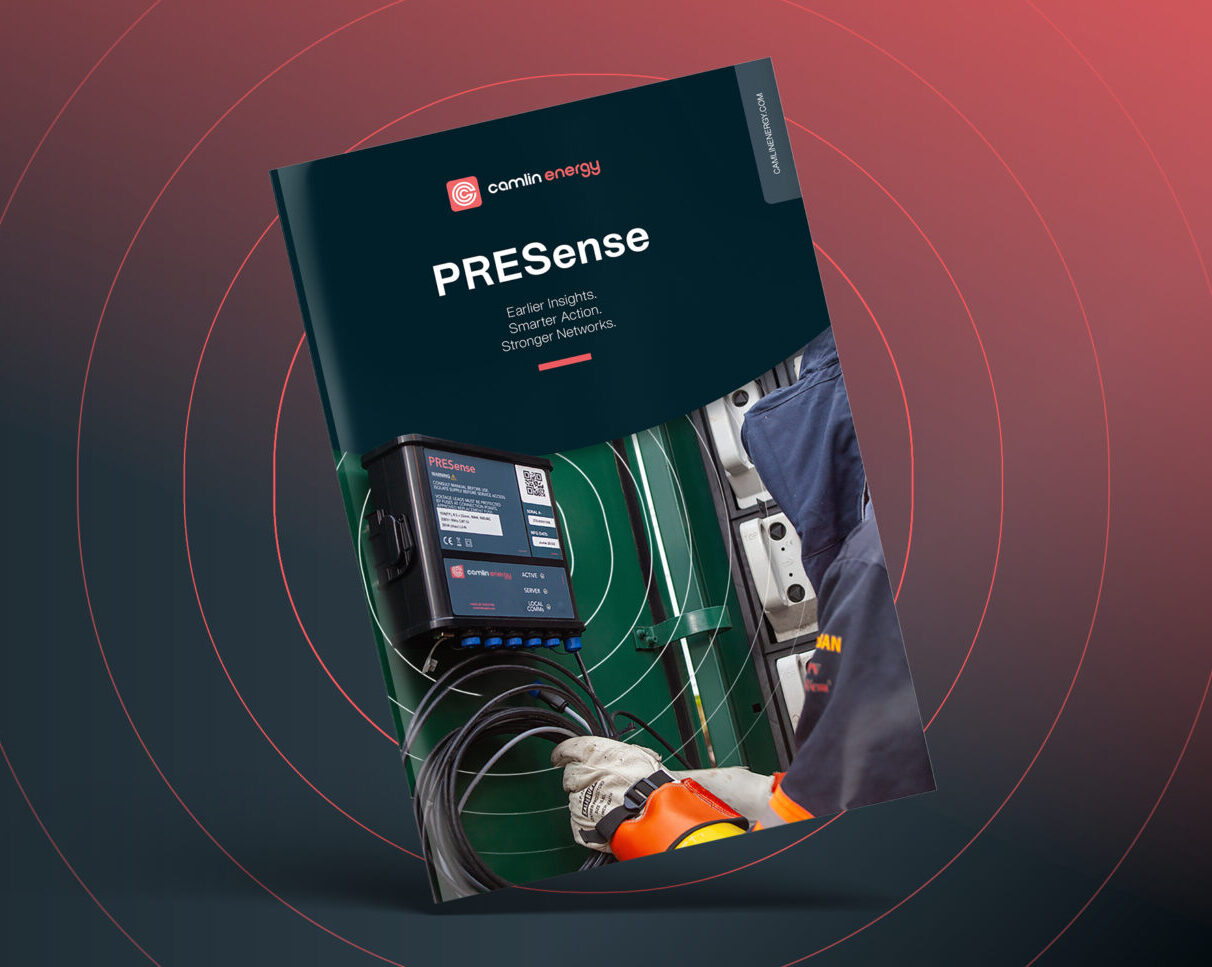
PRESense is designed to bridge this gap by combining high-resolution data capture with AI-driven analysis at the edge. But more importantly, it delivers measurable outcomes, not just (more) data.
Real-world deployments show what this looks like in practice:
- Faults identified within days of installation, delivering ROI within the first week
- Pinpointing achieved within 5 hours, enabling rapid, targeted intervention
- Up to £6,490 cost savings per incident through avoided outages and unnecessary excavation
- 20 – 30+ staff hours saved by reducing fault-finding time and repeat site visits
Crucially, these are not isolated improvements; they reflect a shift in operating model.
Instead of reacting to faults after disruption:
- Issues are identified days or weeks earlier
- Field teams are deployed only when certainty is high
- Interventions are planned, targeted, and lower cost
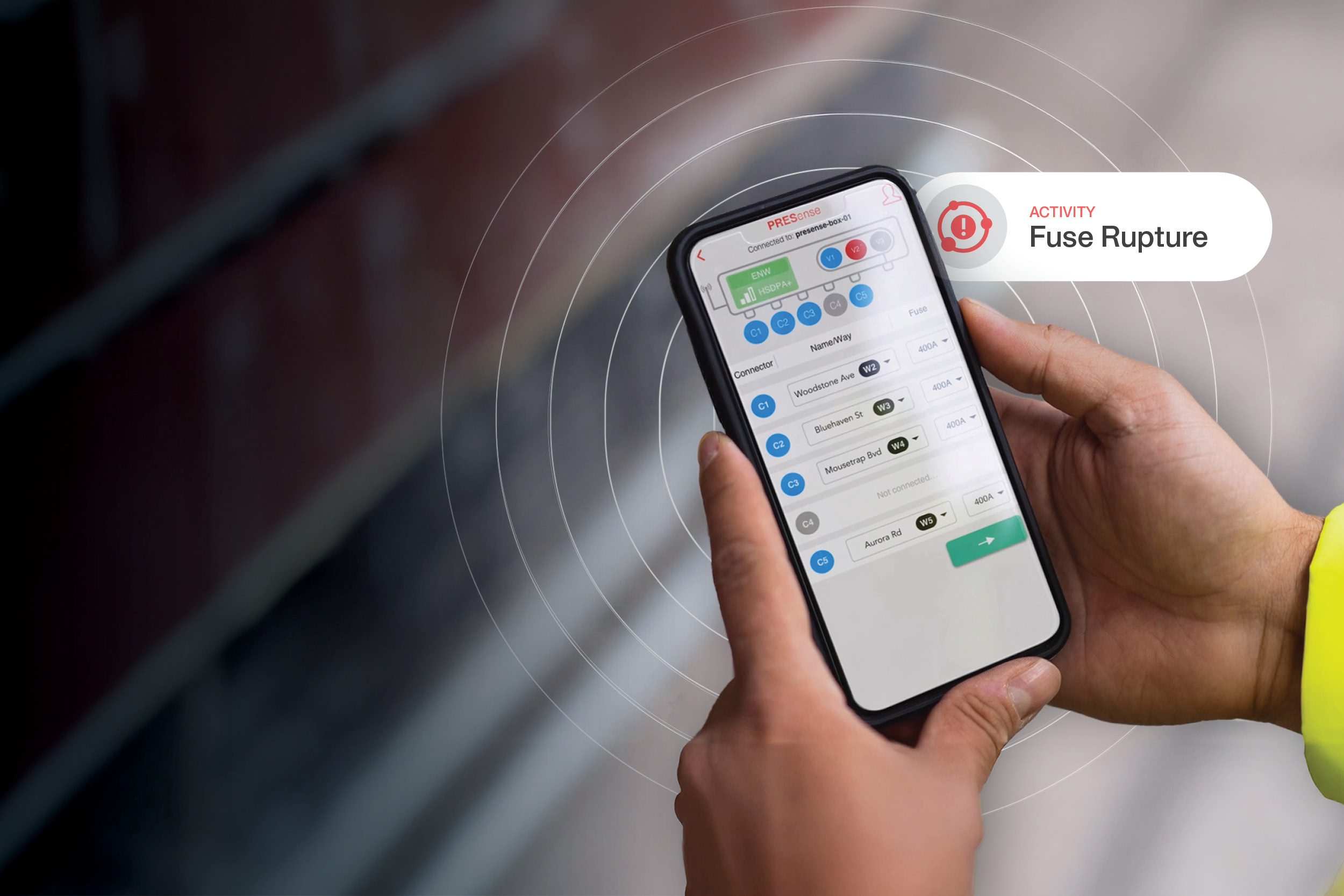
Machine learning models, trained on millions of LV fault events, can even predict time to fuse rupture and likelihood of fault escalation, enabling action before customers are impacted.
A stronger commercial case for change
For decision-makers, this is not just a technical improvement; it is a commercial one.
A data-led LV approach directly impacts:
- Risk reduction
Lower exposure to regulatory penalties, service interruptions, and high-impact outages across diverse regulatory frameworks - Investment optimisation
More precise targeting of capital spend through feeder-level health insight, risk ranking, and condition-based prioritisation - Faster connection timelines
Greater confidence to release available capacity, accelerating the connection of distributed energy resources, electrified transport, and new demand - Operational efficiency
Fewer site visits, reduced excavation, and improved field workforce utilisation through targeted, data-driven interventions - Cost avoidance
Reducing unnecessary reinforcement, avoiding reactive emergency response, and minimising disruption-related costs
This is the difference between managing uncertainty and operating with confidence at scale, across increasingly complex LV networks.
Changing how LV networks are operated
What this ultimately enables is a fundamental shift:
- From reactive fault response → predictive intervention
- From generic network assumptions → evidence-based decisions
- From over-engineering and caution → targeted, risk-informed action
PRESense supports this transition by continuously capturing detailed network behaviour and evolving alongside the network, through remote updates, adaptable monitoring, and ongoing model improvement.
The outcome: confidence at every level
The value is not in generating more data. It is in enabling better decisions that reduce uncertainty and unlock real capacity.
The outcome is measurable:
- Confidence to connect faster without increasing risk
- Confidence to act earlier and avoid escalation
- Confidence to optimise assets instead of overbuilding
- Confidence to reduce operational cost while improving resilience
And ultimately: Confidence to run LV networks as active, intelligent systems, not constrained, reactive ones.