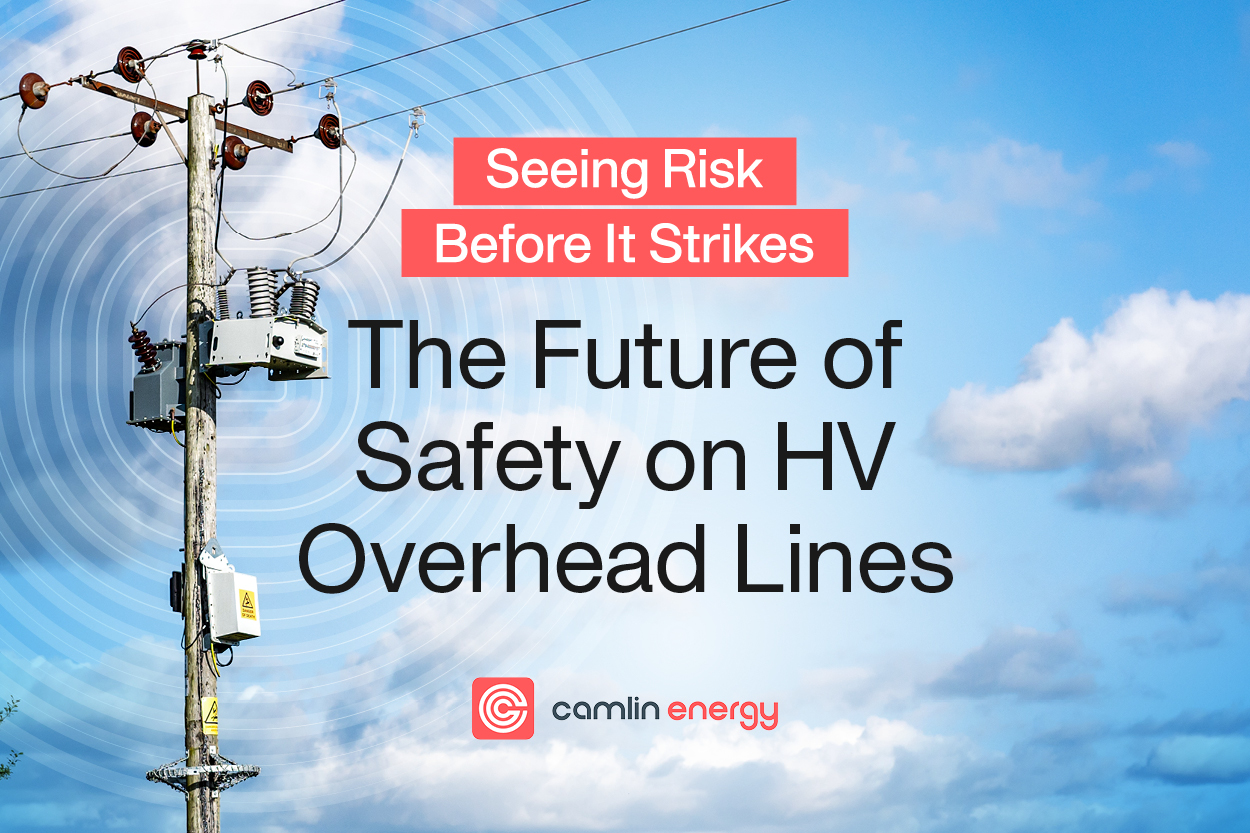
Safety on the HV overhead line network has always been managed through under-grounding, clearances and safe working procedures . Clearances must be maintained. Risks must be assessed. Assets must be inspected. Yet recent events across the industry have forced a deeper question into focus. Are we using the latest technology to protect the public?
Overhead lines flow through fields, towns and remote landscapes alike. They exist in environments that change daily through vegetation growth, third-party activity, extreme weather and increasing land use. While standards and inspection regimes capture obvious defects, they cannot capture all the developing and actual risks
This is where technology steps up, not because procedures are absent, but because visibility is limited.
Traditionally, the industry has relied on periodic and manual inspection and historical risk models to manage overhead line safety. That approach has served the network for decades, but it was designed for a different era. Today, networks are larger, more complex and public expectations are higher. Public reliance on electricity is increasing, while tolerance for risk is rightly decreasing.
The challenge we face is not whether safety matters. It is whether our tools and approaches are evolving fast enough to match our responsibilities.
LineSIGHT was developed on a simple but powerful belief. If we can continuously understand how an overhead line interacts with its environment, we can move from reactive response to preventative action.
That shift changed everything. It means hazards can be identified before they escalate. It means interventions can be prioritised on risk. And critically, it means decisions are based on what is happening now, not what was observed months ago.
While LineSIGHT strengthens asset integrity and network resilience, its broader potential is more human. Continuous visibility does not just protect conductors and towers.
It helps protect farmers working beneath lines, contractors operating nearby, communities living alongside infrastructure and field teams tasked with maintaining it. Every DNO has a story about finding neatly coiled conductors on a farmers field, there have been numerous near misses.
Safety, at its core, is about anticipation. It is about recognising that the absence of incidents does not always mean the absence of risk. As scrutiny increases and expectations evolve, the industry has an opportunity to redefine what good looks like.
The future of HV overhead line safety will not be shaped by compliance alone. It will be shaped by foresight. By systems that help operators see risk developing, understand its consequences and act before harm occurs.
That is the aspiration behind LineSIGHT. Not simply to monitor the network, but to help create one where fewer lives are put at risk because potential dangers were seen earlier and addressed sooner.
That is where technology, insight and responsibility must come together.